



Key Takeaways
- A grown diamond, a mined diamond, and a stone pretending to be both: A laboratory-grown diamond is carbon, crystallised in the same structure as a stone formed underground.
For the full picture, read our main guide to jewellery repairs perth wa.
- Why some jewellers resist lab-grown diamonds: The honest answer is a mix of three things: disclosure risk, uncertainty about how the market will behave over decades, and a trade that spent a century building its knowledge around mined stones.
- Whether anyone can tell, and who actually can: A loupe held across a counter in Perth WA will not tell you.
- Perth WA’s relationship with diamonds is older than its jewellery windows: There is a piece of local history that almost never makes it into a diamond conversation, and it reframes what Perth WA is in this trade.
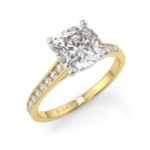
- Shape is the decision people underestimate: Once the grown-or-mined question is settled, shape is where the ring actually starts to become a specific ring rather than an idea.
Can anyone actually tell the difference? Never with a loupe, and never in a photograph. A lab grown diamond in Perth WA is chemically and physically a diamond, grown in a laboratory rather than pulled from the earth. For most buyers, the ring is decided by design, setting, and the certificate behind the stone.
Not at a dinner table either. Choosing between lab-grown and mined is the wrong first question, and most people who walk into a Perth WA showroom already half know it. What they usually want is the longer conversation: what the grown stone means for the ring they have been picturing, whether anyone will be able to tell, why some jewellers pull a face when the subject comes up, and how a piece gets made once the decision is settled. This is that conversation, written down.
A grown diamond, a mined diamond, and a stone pretending to be both
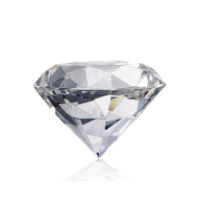
A laboratory-grown diamond is carbon, crystallised in the same structure as a stone formed underground. It is grown either under high pressure and high temperature, which mimics the conditions deep in the earth, or by chemical vapour deposition, where carbon builds up layer by layer onto a thin diamond seed in a chamber. Both methods produce rough that is then cut and polished on the same wheels, by the same hands, to the same standards as mined rough. The finished stone has the same hardness, the same refractive brilliance, and the same behaviour on a bench in Perth WA as any mined stone.
What it is not is a simulant. Cubic zirconia, moissanite, and cut crystal are different materials entirely, and they wear differently: softer stones pick up surface scratches and lose their crispness after a few years on a hand that does the dishes, opens car doors, and carries shopping through a Perth WA summer. Fashion houses famous for crystal have at times also sold laboratory-grown diamond lines, which is exactly why a brand name tells you nothing useful. The paperwork does. If a stone is a diamond, grown or mined, it will have a grading report that says so in plain words.
Here is the distinction laid out side by side, because it is the single most common point of confusion we are asked to clear up in Perth WA.
| Lab grown diamond | Natural mined diamond | Diamond simulant | |
| What it is | Crystallised carbon, grown in a laboratory over weeks | Crystallised carbon, formed in the earth over geological time | A different material altogether: cubic zirconia, moissanite, glass or crystal |
| Hardness in wear | The same as a mined diamond | The hardest natural material known | Noticeably softer, abrades and dulls with daily wear |
| How it is identified | Screening instruments; graded stones are normally inscribed on the girdle | Screening and a grading report | Basic gemmological testing separates it quickly |
| Grading report | Available, and should state “laboratory grown” | Available, including GIA | Not graded as a diamond |
| Must be disclosed at sale | Yes | Not applicable | Yes |
Our diamonds come fully certified with a GIA certificate of authenticity. And whichever way a Perth WA client leans, that report is where we start rather than where we finish. You can read more about how the four Cs actually behave in a finished ring in our guide to diamond grading, and our overview of lab grown diamonds covers the growth methods in more detail than most people need on a first visit.
Why some jewellers resist lab-grown diamonds
The honest answer is a mix of three things: disclosure risk, uncertainty about how the market will behave over decades, and a trade that spent a century building its knowledge around mined stones. None of those are reasons for a Perth WA buyer to avoid a grown diamond. They are reasons to ask harder questions of whoever is selling you one.
Disclosure comes first because it is the part with real consequences. Under Australian Consumer Law, a business must not make false or misleading representations about goods, and a grown stone described loosely as simply “a diamond” on a tag, a receipt, or a valuation is where trouble starts. A grown stone should be identified as laboratory grown at the counter, on the report, and on any valuation document that follows it home to Applecross, Booragoon or anywhere else in Perth WA. A jeweller who is vague on that point is not protecting you from anything.
The second worry is longer term. Mined stones carry decades of established trade behaviour behind them. And grown stones simply have not existed at scale for long enough to have the same track record, here in Perth WA or anywhere else. That is a fair observation rather than a criticism of the material, and it matters most for people who think of jewellery as something that changes hands later rather than something that stays in the family. If a piece is being made to be worn and then passed down, the question answers itself.
The third reason is the least talked about. Some of the resistance is craft pride, and craft pride, when it is honest, is worth listening to. A grown stone does not make a badly proportioned ring good. And it does not rescue a thin, hollow setting that will loosen in two years on a Perth WA hand that never comes off. The stone is one decision out of perhaps forty that go into a piece of handcrafted jewellery, and it is not the decision that determines whether the ring survives a decade of real wear.
Whether anyone can tell, and who actually can
A loupe will not tell you. Neither will a photograph, a video, or any test you can run at the kitchen table in Perth WA. Grown and mined diamonds are the same material, so the surface-level checks that separate a diamond from a simulant are useless for separating a grown diamond from a mined one.
What does work is laboratory screening. Trace elements, fluorescence and phosphorescence behaviour, and the internal growth patterns left behind by the two methods all differ between grown and mined stones, and specialised instruments read those differences reliably. That is why the written report, rather than anyone’s eye across a Perth WA counter, is what settles the detection question. As at 2026, a grown stone of any meaningful size is normally sold with its own grading report, and graded stones are usually inscribed on the girdle with a report number and a note that the stone is grown rather than mined. That inscription is invisible to the naked eye and readable under magnification, which means the truth of the stone travels with it permanently, even if the paperwork goes missing in a move across Perth WA.
The practical upshot: nobody at a dinner party in Perth WA will be able to tell. And nobody with the right equipment will ever be fooled. Both of those facts are good news, and they are the same fact.
Perth WA’s relationship with diamonds is older than its jewellery windows
There is a piece of local history that almost never makes it into a diamond conversation, and it reframes what Perth WA is in this trade. Perth WA has functioned as a technical centre for diamond work, not just a retail one. A Northern Territory exploration report lodged with the Geological Survey records that all 307 stream sediment samples collected during the 2002 field season were sent to various diamond processing laboratories in Perth WA for analysis.
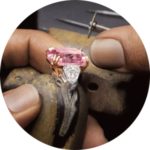
That is not a retail detail, it is a capability detail. Exploration programs across the country sent their material west because the expertise and the equipment were in Perth WA. Western Australia also gave the world its most recognised pink diamonds, which is why Perth WA buyers tend to arrive with a sharper eye for colour than buyers elsewhere. When someone in Applecross or Booragoon asks whether a grown pink reads the same as a natural one, they are usually asking a genuinely informed question, and our guide to choosing pink diamond jewellery in Perth WA goes into how saturation and tone behave once a stone is set.
So the grown diamond did not arrive in a city that knew nothing about stones. It arrived in a Perth WA that has been looking closely at them for a very long time.
Shape is the decision people underestimate
Once the grown-or-mined question is settled, shape is where the ring actually starts to become a specific ring rather than an idea. Shape governs how the stone sits against the finger, how light moves across it in the late Perth WA afternoon, how the wedding band will eventually meet it, and how much protection the setting has to give.
| Shape | How it reads on the hand | What the setting has to account for |
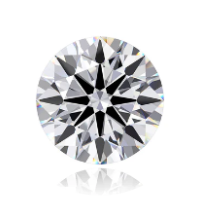
| Round brilliant | Even, symmetrical, throws light from every angle | Forgiving. Claws or a bezel both work cleanly |
| Oval | Elongates the finger, softer than a round | Watch for the bow-tie shadow across the centre; the two points need protection |
| Pear | Directional and tapered, reads as bespoke rather than classic | The point is the vulnerable spot and should sit under a dedicated claw or a bezel edge |
| Radiant | Broad, lively, brilliant-cut facets in a rectangular outline | Corners are cut, so it is more durable than it looks; suits a lower profile |
| Cushion | Rounded corners, softer light return, quietly romantic | Sits comfortably with a hidden halo without looking crowded |
| Marquise | The longest look for its footprint, two fine points | Both points need real metal around them or they will chip |
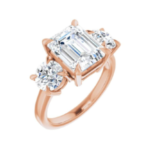
| Emerald | Step-cut, restrained, shows clarity rather than sparkle | Clarity choice matters more here than in any brilliant cut |
Because grown rough is produced to a target shape and orientation rather than found in whatever form the earth made it, elongated fancy shapes are widely available in grown material without hunting. That is a real practical difference, and it is the one that most often changes what a Perth WA client chooses. Someone who walked in set on a round brilliant frequently leaves having designed around an oval or a radiant, because the shape they actually wanted turned out to be within reach in the size and the proportion they had in mind.
Settings: bezel, hidden halo, and the band that has to live beside it
The setting is where a stone stops being a stone and becomes jewellery you can actually wear around Perth WA. A bezel wraps a rim of metal fully or partly around the stone, which suits hands that work, hands that wear gloves, and anyone who has already lost one earring and does not intend to lose a diamond. It sits low, catches on nothing, and gives a pear or a marquise point the armour it needs.
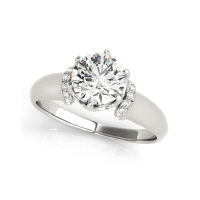
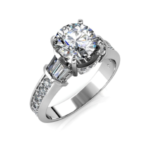
Claws lift the stone into the light and show more of it, which is why they remain the traditional choice in Perth WA, and a hidden halo tucks a ring of small stones underneath the centre where only the wearer sees it from above. It is the detail people describe as their secret, and it is one of the most requested features in custom engagement rings now. It also quietly adds width under the setting, which changes how the wedding band sits, and that is a conversation worth having before the ring is made rather than a year later.
| Setting | What it gives you | Where it earns its keep in Perth WA |
| Bezel | A full or partial metal rim, low profile, nothing to snag | Working hands, gloves, gym bags, and the vulnerable points of pears and marquises |
| Claws | Maximum light into the stone and the traditional silhouette | Buyers who want the classic look and will keep to a yearly claw check |
| Hidden halo | A private ring of small stones seen only from the side | Buyers who want a secret detail, provided the wedding band is planned at the same time |
Metal choice does more work than Perth WA buyers expect. Yellow gold warms a slightly tinted stone and flatters olive and deeper skin tones. White gold and platinum read cool and let a colourless stone stay colourless. Rose gold sits between the two and softens hard geometry, which is why it suits emerald and radiant outlines so well. Black rhodium finishes and black diamond accents have found their way into contemporary designs for people who want something with more edge than sparkle.
| Metal | How it reads | What it does for the stone |
| Yellow gold | Warm, traditional, flattering on olive and deeper skin tones | Softens and warms a slightly tinted stone |
| White gold and platinum | Cool and neutral | Lets a colourless stone stay colourless |
| Rose gold | Between warm and cool, softens hard geometry | Suits emerald and radiant outlines particularly well |
| Black rhodium finish | Contemporary and graphic | Sets off black diamond accents and matte contrast |
Our very talented jewellers craft your chosen metal, be it gold or platinum, into the piece of jewellery that you have dreamed of, and metal is one of the easiest things to change while a design is still on the screen in our Ardross studio. If the engagement ring and wedding band relationship is the part you are unsure about, our comparison of engagement rings and wedding rings covers how the two are designed to sit together rather than compete.
Colour, and the freedom that comes with growing a stone
Colour is where grown stones are at their most interesting, and in Perth WA it is where the conversation tends to run longest. Fancy coloured diamonds occur naturally in tiny quantities, which historically put pink, blue, and vivid yellow stones beyond most designs. Grown material changes what is available, not what the stone is: a grown pink is a diamond with the same hardness and the same wear behaviour as any other diamond, coloured by the same kinds of structural and chemical factors.
That opens up design ideas that used to stay as sketches on a Perth WA drawing pad.
| Colour direction | The design idea it unlocks | What to watch |
| Pink | A pink accent flanking a colourless centre | Saturation and tone shift once the stone is set |
| Yellow | A yellow cushion in yellow gold | The combination sings or falls flat depending on how closely metal tone is matched |
| Black | Black diamonds banded against polished white metal | Contrast, not sparkle, is the point |
None of these are novelties, they are simply design options that are now actually reachable for Perth WA buyers.
Colour also rewards seeing the stone in person more than any other characteristic. Photographs lie about saturation, screens lie about tone, and two stones described identically on paper can look like different gems under Perth WA daylight.
Buying in person versus buying a photograph and a shipping label
This is the part worth being direct about. A great deal of grown diamond jewellery is sold online, shipped from over east or from overseas, arriving in a Perth WA letterbox with a report and a return window. For a plain pendant or a simple pair of stud earrings, that can work perfectly well. For an engagement ring, it asks you to make a permanent decision about a physical object using a photograph.
| What you are deciding | What a photograph can tell you | What only the piece in your hand can tell you |
| Fit between the fingers | Very little | Whether the band actually sits comfortably, which is a fit question rather than a size question |
| Profile over the knuckle | Nothing reliable | Whether the setting clears without rocking |
| Stone against skin | A studio backdrop | How it reads against your own skin tone in Perth WA daylight |
| Room for the wedding band | Rarely shown | Whether the shoulders taper so a band sits flush later |
| Scale of the shape | Misleading | Whether a marquise that looked striking online overwhelms a shorter finger |
The other difference is what happens when something needs changing. A shipped ring that is not quite right becomes a returns process from Perth WA. A ring designed and made here becomes an adjustment. When you discuss your jewellery requirements with us, we listen, make suggestions from experience, and supply detailed drawings of your design, and you should not feel pressured to accept the initial drawings, because our process allows for adjustments so that you receive your perfect piece. That sequence is the whole point of designing locally, and our guide to choosing between jewellery stores in Perth WA sets out what else is worth checking before you commit.
Beyond the engagement ring
Lab-grown stones are not only an engagement ring conversation in Perth WA, even though that is how most people arrive at them. Studs and drop earrings are the most obvious extension, because earrings live a gentler life than rings and reward a larger or more saturated stone than you might choose for something worn every day. Our guide to earrings walks through how face shape, hair, and setting height interact, and the same thinking applies whether the stone is grown or mined.
Then there is remodelling. A ring inherited from a grandmother, worn thin at the back, with stones that have loosened and a design that belonged to a different era. Those pieces carry more feeling than any new purchase, and they usually need a decision about what to keep and what to let go. We offer complete services for old or sentimental pieces to be reworked into modern, personalised designs, and a grown stone sometimes solves the arithmetic of a remodel by supplying a matching shape or colour that would otherwise be impossible to find. The original stones stay in the piece. The setting around them changes.
One reassurance matters more than any other in that work: the workshop is on our premises in Ardross, south of the river in Perth WA, so any items of jewellery you have supplied never leave our care. For an heirloom, that is not a logistics detail, it is the whole basis of trust.
Whether a grown diamond is worth choosing
Strip the question back and it stops being about the stone at all. A lab-grown diamond is a diamond. It will not scratch, cloud, or dull, it will not need replacing, and it will look exactly as it does on the day you collect it in Perth WA for as long as it is cared for. On every measure of durability and appearance, the answer is settled.
What remains is what you want the piece to mean and how you want it made. Some people want the geological story of a stone formed underground long before anyone was here to find it, and that preference is entirely legitimate. Others care far more that the design is theirs alone, that the proportions are right for their hand, and that the ring was drawn, modelled, and crafted in Perth WA by people they met. As at 2026, that is the honest summary: the material question is answered, and the design question is the one still open.
The failure modes we see in the Perth WA market are not grown stones. They are hollow settings, claws set too thin, stones chosen from a screen and set into a design that never suited them, and paperwork that does not say what the stone actually is. Get those four right and the grown-or-mined decision becomes a matter of taste rather than risk. Our guide to caring for your diamond jewellery in Perth WA covers the maintenance side. And a yearly check of the claws is the single habit that saves the most stones.
How a piece gets made here
We have refined our business to provide a complete service, from on-site design and manufacture of our jewellery to sourcing the world’s most exquisite diamonds, and the sequence in our Perth WA studio is deliberately unhurried.
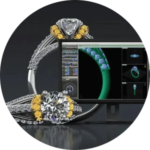
It starts with a consultation appointment. You bring what you have: a photograph, a sketch on your phone, an old ring in a velvet box, or nothing at all beyond a feeling about what you want. We listen and make suggestions from experience, and you leave with detailed drawings rather than a quote to sign on the spot. Using computer-aided design software we produce a 3D model of your jewellery so you can see it from every angle before a single gram of metal is cut, and when you are happy with the design we can produce a 3D print for your final approval. The process is interactive.
| Stage | What happens | What you leave with |
| Consultation | We listen and make suggestions from experience | Detailed drawings of your design |
| Design refinement | Adjustments, because nobody should feel pressured to accept the first drawings | A design that is actually yours |
| CAD and 3D print | A digital model, then a print for final approval | The piece in your hand before it is made in metal |
| Crafting | Work crafted in our Ardross studio by qualified jewellers | A finished piece, handcrafted on-site in Perth WA |
Conveniently located south of the river in Ardross, with parking at the door, our team of qualified jewellers can help you work out which of these decisions actually matters for the piece you have in mind.
The questions that come up again and again in Perth WA
The same few worries surface in almost every conversation about grown stones, and they are worth answering in the order they usually arrive.
The first is usually whether a lab-grown diamond is worth buying at all. On durability and appearance it is a settled question, because it is a diamond and will not scratch, cloud, or dull with wear. What is left is meaning and making. Some Perth WA buyers want the geological story of a mined stone and choose accordingly. Others care far more that the design and the proportions are truly theirs, and for them the grown stone is simply the sensible route to the ring they had in mind.
The second is why some jewellers push back. It comes down to those same three things: disclosure risk, uncertainty about how the market behaves over decades, and a trade whose knowledge was built around mined stones. None of that argues against the material. It argues for asking, plainly, whether the stone is identified as laboratory grown on the report and on any valuation that follows it home.
The third is the brand question, usually prompted by a crystal name someone has seen in a shopping centre in Perth WA. Crystal is a simulant, not a diamond, even where the same fashion houses have also sold grown diamond lines. The brand tells you nothing. The paperwork tells you everything, because a grading report states in plain words whether a stone is a diamond and whether it was grown.
The fourth is detection, and it is the one people ask most nervously. Not with a loupe, no. Grown and mined stones are the same material, so the surface checks that catch a simulant cannot separate grown from mined. Screening instruments read trace elements, fluorescence, phosphorescence, and internal growth patterns, and graded stones are usually inscribed on the girdle with a report number and a note that the stone is grown, invisible to the naked eye and permanent. Which returns us to where this started: the report answers the question, and nobody across a dinner table in Perth WA ever will.
Frequently Asked Questions
Is a lab-grown diamond worth buying?
Yes, on durability and appearance it is a settled question, because a lab-grown diamond is a diamond and will not scratch, cloud, or dull with wear. What remains is meaning and making. Some Perth buyers want the geological story of a mined stone, while others care far more that the design and proportions are genuinely their own.
Why are jewelers against lab diamonds?
Some jewellers push back for three reasons: disclosure risk, uncertainty about how the market will behave over decades, and a trade whose knowledge was built around mined stones. None of that argues against the material itself. It argues for asking plainly whether the stone is identified as laboratory grown on the report and on any valuation that follows it home.
Is Swarovski a lab diamond?
No, crystal is a simulant rather than a diamond, even though some fashion houses known for crystal have also sold laboratory-grown diamond lines. That is exactly why a brand name tells you nothing useful. The paperwork does. A grading report states in plain words whether a stone is a diamond and whether it was grown.
Can a jeweler detect a lab diamond?
Not with a loupe across a counter, but laboratory screening instruments identify grown stones reliably. They read trace elements, fluorescence and phosphorescence behaviour, and internal growth patterns. Graded stones are also usually inscribed on the girdle with a report number and a note that the stone is grown, invisible to the naked eye and permanent.
What is the difference between a lab grown diamond and a diamond simulant like cubic zirconia or moissanite?
A lab-grown diamond is crystallised carbon with the same hardness and brilliance as a mined stone, while cubic zirconia and moissanite are entirely different materials. Simulants are noticeably softer, so they abrade and lose their crispness after a few years of daily wear. Only diamonds, grown or mined, carry a diamond grading report.
Can anyone tell whether my diamond is lab grown or mined just by looking at it?
No, nobody can tell by eye, and never from a photograph or video either. Grown and mined diamonds are the same material, so the surface checks that catch a simulant cannot separate them. Only laboratory screening settles it, which is why the written grading report matters far more than anyone’s eye across a counter.